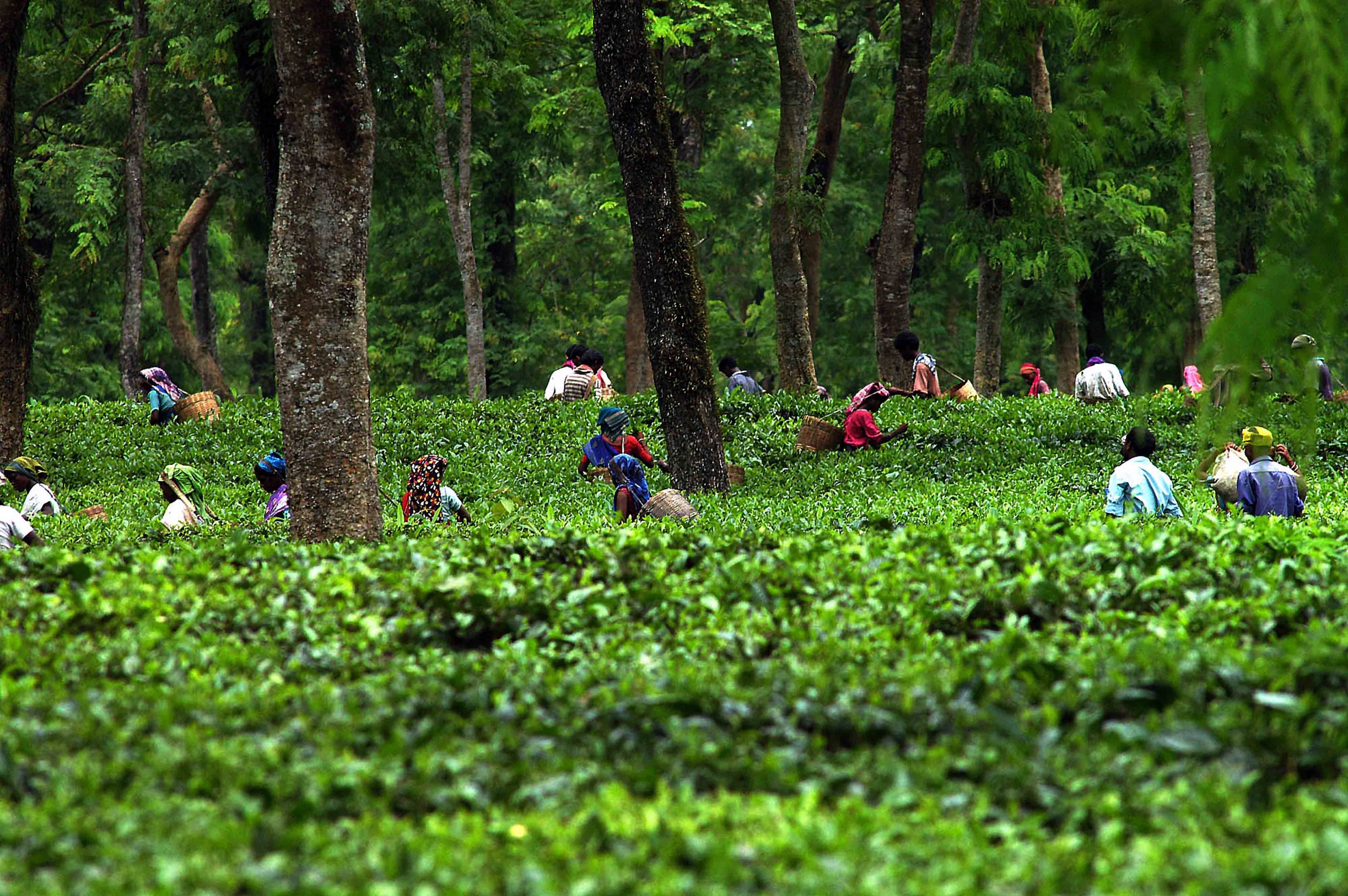
GUWAHATI — Assam's tea workers have intensified their demand for higher daily wages, with labour organisations calling the government's latest increase inadequate and renewing demands for a minimum wage of ₹351 a day.
The latest dispute follows a ₹30 interim increase approved by the Assam government in February. From April 1, workers in the Brahmaputra Valley became entitled to a daily wage of ₹280, while those in the Barak Valley were to receive ₹258. The increase followed a recommendation by the state's Minimum Wages Advisory Board.
The revision came after months of pressure from tea workers and unions. In January, workers across tea estates in the Brahmaputra Valley staged flash protests demanding that the daily wage be increased from ₹250 to ₹351. At Rajabari Tea Estate in Moran and other gardens, workers temporarily stopped work and gathered outside estate gates, describing the action as a warning to the government and plantation managements.
Similar protests were reported in Tinsukia in February, where workers at estates including Tipuk and Raidang held a two-hour demonstration demanding an immediate increase to ₹351. The protests were supported by the Assam Tea Tribes Students' Association. Workers argued that the government's one-time financial assistance of ₹5,000 announced for tea workers could not substitute for a permanent increase in wages.
Tea garden organisations criticised the government's ₹30 increase soon after it was announced. Groups including the All Adivasi Students' Association of Assam and the Adivasi Youth-Students' Association said the increase did not adequately reflect inflation or the economic difficulties facing plantation communities.
The current wage structure is the result of successive interim revisions. The Brahmaputra Valley wage had stood at ₹250 per day following an ₹18 increase in October 2023, while workers in the Barak Valley were receiving ₹228. Before that, the state had raised the Brahmaputra Valley rate to ₹232 in 2022.
The wage issue has become particularly significant ahead of Assam's 2026 Assembly election. In February, Chief Minister Himanta Biswa Sarma said the government was negotiating with tea associations and suggested that wages could be raised further. The government subsequently approved the ₹30 interim increase following a tripartite meeting involving the state, workers' representatives and plantation owners.
The government has since indicated that the latest increase is not necessarily the final figure. In May, Sarma said his government wanted to raise tea workers' wages to ₹450 during its tenure, but linked the target to stronger growth, modernisation of the tea industry and greater support from stakeholders.
The scale of the workforce makes the issue significant beyond individual plantations. According to data provided by the Assam government to Parliament, the state had 6,84,064 tea workers employed in tea estates, including more than 60,000 in the Barak Valley. Tea workers' wages are determined through agreements involving plantation associations, workers' unions and the state government.
The financial pressures facing workers have also been accompanied by continuing concerns over living and working conditions in tea gardens. Labour organisations have argued that wage increases have not kept pace with the cost of living, while campaigners have continued to raise concerns about housing, sanitation, healthcare and other welfare provisions in plantation communities.
For workers demanding ₹351 a day, the government's latest interim rate remains substantially below what unions and worker organisations consider necessary. The difference between the current ₹280 rate in the Brahmaputra Valley and the ₹351 demand is ₹71 per day.
The dispute has so far produced protests, negotiations and successive interim wage increases rather than the indefinite statewide strike described in earlier reports. With the government promising further discussions and workers continuing to press for a larger increase, wages are likely to remain a major labour issue in Assam's tea industry.